Self-Conscious vs Self-Aware: The Real Difference & How to Shift

Self-consciousness is an anxious awareness of yourself from an external, judgmental perspective, focusing on how others might perceive you. Self-awareness is a neutral, internal observation of your own thoughts, feelings, and behaviors without judgment. One is rooted in fear, the other in objective understanding.
A Tale of Two Lenses: One Distorts, One Clarifies
You’ve felt both. The hot flush of embarrassment when you speak in a meeting and immediately regret your choice of words. That’s self-consciousness. You’ve also had moments of quiet insight, noticing you’re irritable because you skipped lunch, and deciding to eat something instead of snapping at a colleague. That’s self-awareness. The contest between being self-conscious vs. self-aware is happening constantly in your mind.
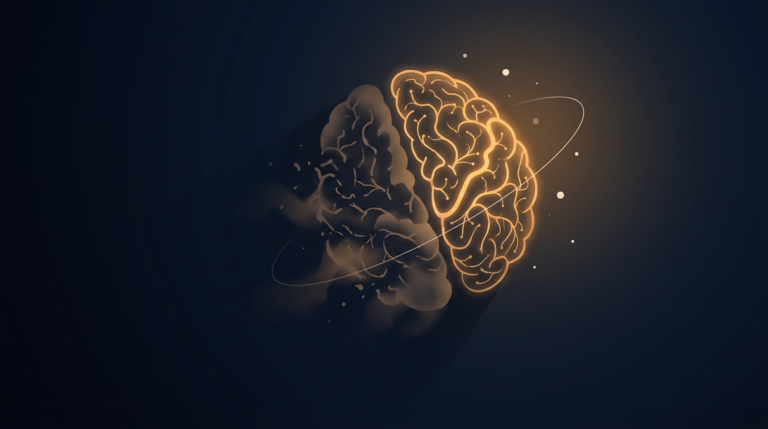
Think of your attention as a lens. Self-consciousness is a distorted, funhouse mirror. It reflects a warped version of yourself, magnified by the imagined judgment of others. It’s a state of anxious performance, where your focus is entirely on how you think you look from the outside.
Self-awareness is a clean, clear magnifying glass. It’s pointed inward, not to judge, but to see. It allows you to observe your internal state—your thoughts, feelings, and physical sensations—with objective curiosity. One state traps you in a mental loop of anxiety; the other gives you the information you need to break free.
What Is the Main Difference Between Being Self-Conscious and Self-Aware?
The main difference is the perspective and the presence of judgment. Self-consciousness is viewing yourself through the imagined, critical eyes of others, which creates anxiety. Self-awareness is viewing your own internal state from a neutral, first-person perspective, which creates clarity and control.
Self-Consciousness: The Spotlight of Judgment
Self-consciousness is the feeling of being watched and evaluated. It’s a state of outward focus, but the “outward” is a fiction—it’s your projection of what others might be thinking. This state is defined by a self-critical inner monologue: “Did I say the right thing?” “Do I look awkward?” “They probably think I’m an idiot.”
The mechanism here is a painful preoccupation with perception. Your mental energy isn’t on the task at hand or the person you’re with; it’s consumed by managing your appearance. This is the mind in a defensive crouch, anticipating a social threat that is rarely real. It is a deeply uncomfortable state fueled by insecurity and fear.
Self-Awareness: The Light of Observation
Self-awareness is the opposite. It’s a quiet, inward focus. It’s the ability to recognize and identify your own internal state without getting swept away by it. A self-aware person doesn’t just feel angry; they notice, “I am feeling a surge of anger right now. My chest is tight and my thoughts are racing.”
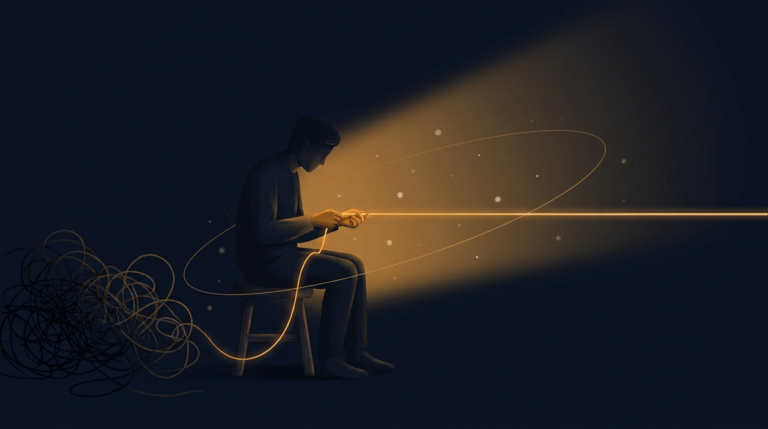
This is not a cold, detached state. It is a practice of presence. By observing your thoughts and feelings, you create a sliver of space between the stimulus and your response. In that space lies the power to choose. Instead of reacting automatically, you can respond with intention. It’s the difference between being the storm and being the calm, clear sky that holds the storm.
The Psychological Roots: Where Do These States Come From?
These states aren’t random. They are the products of conditioning and practice. You were not born chronically self-conscious; it was likely learned. And you are not born perfectly self-aware; it must be cultivated.
The Conditioning Behind Self-Consciousness
Chronic self-consciousness often has roots in past experiences. A moment of public embarrassment in school, a critical parent, or social rejection can wire your brain to be hyper-vigilant for social threats. Your mind creates a default setting: “Social situations are dangerous. Monitor yourself constantly to avoid pain.”
Neurologically, this is related to an overactive Default Mode Network (DMN). The DMN is the part of your brain active when you’re mind-wandering or thinking about yourself. When it’s stuck in a loop of negative, self-referential thought—or rumination—it becomes the engine of self-consciousness and social anxiety.
Self-Awareness as a Developmental Skill
Self-awareness, in contrast, is a skill you build. It requires deliberately training your attention. It’s a core component of emotional intelligence. You cannot regulate your emotions if you are not aware of them in the first place.
Developing this skill involves strengthening the brain’s executive functions—the parts responsible for focus and cognitive control. You learn to disengage from the DMN’s anxious chatter and intentionally direct your focus. It’s like a muscle. The more you practice noticing your internal state without judgment, the stronger your capacity for self-awareness becomes.
What are some examples of self-conscious vs. self-aware behavior?
The difference is most obvious in high-stakes situations. Consider how each state plays out in common scenarios. The focus of attention—outward and imagined versus inward and real—determines the behavior.
| Scenario | Self-Conscious Behavior | Self-Aware Behavior |
|---|---|---|
| Giving a Presentation | Focus is on the audience’s perceived judgment. You stumble on a word and think, “They all think I’m incompetent.” Your heart races, you lose your place, and your mind is filled with a running commentary of self-criticism. | Focus is on your internal state and your intention. You notice your heart is racing and think, “Okay, nerves. That’s normal. Take a breath.” You accept the physical sensation and redirect your focus to delivering your message with clarity. |
| Receiving Feedback | You hear criticism and immediately feel defensive. It feels like a personal attack on your identity. You might argue, shut down, or spend the rest of the day in a loop of rumination about the perceived slight. | You listen to the feedback. You notice the initial sting of criticism (“That doesn’t feel good.”) but separate the feeling from the information. You ask clarifying questions to understand the other person’s perspective and look for the truth in their point. |
| Walking into a Party | You immediately feel like all eyes are on you. You worry about your clothes, how you’re standing, and whether you know enough people. The goal becomes to “act normal” and avoid looking awkward. | You notice a feeling of social apprehension. You take a moment to ground yourself, scan the room with curiosity, and set an intention: “I’m going to find one interesting person to talk to.” The focus is on your own experience and goal, not imagined evaluation. |
A Simple Test: Is Your Attention Inward or Outward?
Here is the simplest diagnostic. In any given moment, ask yourself one question:
“Is my attention focused on how I might appear to others, or is it focused on what I am actually experiencing right now?”
The first is the voice of self-consciousness. It’s a guess, a story, a projection. The second is the voice of self-awareness. It is direct data from your own system. One is speculation, the other is truth.
The Real-World Impact: Why This Distinction Matters
This isn’t just a philosophical exercise. The state you habitually occupy has profound, compounding consequences on your work, your relationships, and your mental peace.
The Hidden Costs of Chronic Self-Consciousness (Anxiety, Social Withdrawal)
Living in a state of chronic self-consciousness is exhausting. It’s like running a background surveillance program on yourself at all times, draining your mental “compute” resources. This constant self-monitoring is a primary driver of social anxiety.
The feedback loop is vicious. You feel self-conscious, which makes social interaction feel threatening. You begin to avoid those situations—turning down invitations, staying quiet in meetings. This social withdrawal means you get less practice, which makes you feel even more awkward and self-conscious when you can’t avoid it. It shrinks your world, one missed opportunity at a time.
The Compounding Benefits of True Self-Awareness (Emotional Regulation, Better Decisions)
True self-awareness builds a powerful, positive feedback loop. When you are aware of your feelings, you can begin to manage them. This skill is called emotional regulation, and it is a cornerstone of a calm, effective mind. You learn to notice your triggers and choose your responses, rather than being hijacked by your emotions.
This clarity leads to better decisions. A self-aware person knows their values, their strengths, and their biases. They can distinguish between a decision based on fear and one based on authentic desire. This builds self-trust, which is the foundation of confidence. Your relationships improve because you can communicate your needs clearly and understand others’ perspectives with more empathy.
How can you become more self-aware and less self-conscious?
Shifting from a default of self-consciousness to one of self-awareness is a deliberate practice. It is not about “just stopping thinking about it”—advice that has never worked for anyone. It’s about systematically redirecting your attention.
The Observer vs. The Judged: A Framework for Shifting Your Focus
The foundational move is to create a separation between your self and your thoughts. You are not the anxious thought; you are the one who is aware of the anxious thought. By taking the perspective of “the observer,” you step out of the role of “the judged.” This isn’t a one-time fix; it’s a new way to relate to your own mind.
Step 1: Name the Feeling (Labeling)
When you feel that familiar hot flush of self-consciousness, simply name it. Say to yourself, “This is self-consciousness,” or “Anxiety is present.” Research shows that the simple act of labeling an emotion calms the amygdala, the brain’s alarm center. It moves the activity from the reactive, emotional part of your brain to the more observational, prefrontal cortex.
Step 2: Ground in the Present (The Role of Mindfulness & Breathing)
Self-consciousness thrives in the imagined future (“what if they laugh?”) or the replayed past (“why did I say that?”). Its enemy is the present moment. The fastest way to get here is through your body.
Take a single, deliberate breath. Feel the air enter your lungs and then leave. Feel your feet on the floor. Notice the pressure of the chair against your back. These physical sensations are undeniably real and happening now. This act of grounding anchors your attention, pulling it out of the anxious story in your head. Mindfulness is the master skill for cultivating this presence.
Step 3: Shift from ‘How I Look’ to ‘What Is True’
Your self-conscious mind asks, “What do they think of me?” This is an unanswerable, anxiety-provoking question. Replace it with a better one. Ask, “What is my intention here?” or “What am I trying to achieve?”
This shift redirects your focus from external perception to internal purpose. If your intention is to connect with someone, focus on being curious about them. If your intention is to share an idea, focus on articulating it clearly. Purpose is a far more powerful guide than fear.
Step 4: Practice Internal & External Self-Awareness
Self-awareness has two parts. Internal self-awareness is knowing your own values, feelings, and aspirations. External self-awareness is understanding how others see you. You need both.
- For Internal Awareness: Journaling is the single most effective tool. It forces you to translate the vague weather patterns of your mind into concrete words. You can’t read the label from inside the jar, but you can write down what it feels like.
- For External Awareness: Carefully ask for feedback from people you trust. Frame the request specifically: “When I presented that idea in the meeting, how did my explanation land? Was there any part that was unclear?” This shrinks your blind spots—the things others see that you don’t.
Our Guided Journal is designed specifically for this. It provides the structure to move from vague feelings to actionable insights, helping you practice both internal and external awareness systematically.
Common Misconceptions About Self-Awareness
The path to self-awareness is often cluttered with misunderstandings. Let’s clear a few of them.
Misconception: Self-Awareness Means You’re Perfect
This is completely backward. Self-awareness doesn’t mean you have no flaws. It means you have an honest, clear-eyed inventory of them. You are aware of your tendency to procrastinate, your short temper when you’re tired, or your fear of failure. This awareness doesn’t make you perfect; it makes you effective, because you can now work with your nature instead of being a victim of it.
Misconception: It’s the Same as Overthinking or Rumination
This is the most critical distinction. Rumination is self-consciousness in a feedback loop. It’s getting stuck on the same judgmental, self-critical thoughts without resolution. It’s unproductive, draining, and feels terrible.
Self-awareness is the antidote to rumination. It is the act of noticing, “Ah, I am stuck in a rumination loop about that comment.” The awareness itself is the first step to breaking the cycle. Self-awareness is observation; rumination is obsession.
Is being self-conscious always a bad thing?
Not necessarily. The dose makes the poison. A fleeting moment of self-consciousness can be a useful social signal, but a chronic state is a psychological burden. The key is to distinguish between a temporary signal and a permanent state of being.
Temporary vs. Chronic Self-Consciousness: A Crucial Distinction
A brief flash of self-consciousness is a normal part of being a social animal. It’s the mechanism that stops you from walking around with food on your face or talking too loudly in a library. It’s a temporary course-correction signal that helps you navigate social norms. You notice it, adjust your behavior, and move on.
Chronic self-consciousness is different. It’s when the alarm bell is always ringing. It’s a persistent, generalized anxiety about being judged that interferes with your ability to function and connect. This is not a helpful signal; it’s a system malfunction. For founders and creators, this chronic state can be paralyzing, preventing you from shipping your work or leading your team. At Thinker’s Studio, we help leaders build the mental models to overcome this, turning anxious minds into productive, calm systems.
When to Seek Professional Help
A blog post can provide a map, but sometimes you need a guide. If your feelings of self-consciousness are persistent, overwhelming, and preventing you from living the life you want to live, it may be a sign of social anxiety disorder or another condition. Speaking with a therapist or counselor is a sign of strength. They are professionals trained to help you navigate this terrain and rebuild your mental defaults.
FAQ
Can you be both self-conscious and self-aware at the same time?
Yes. In fact, this is the beginning of change. You can be aware of the fact that you are feeling self-conscious. That awareness is the first step out of the trap. You notice the feeling (“I’m feeling very self-conscious right now”) without judgment, which is an act of self-awareness.
Is self-awareness related to mindfulness?
Absolutely. Mindfulness is the core practice for developing self-awareness. It is the training of paying attention to the present moment, on purpose, and non-judgmentally. Every minute you spend practicing mindfulness, you are strengthening the “muscle” of self-awareness.
How does journaling help with self-awareness?
Journaling takes the abstract mess of thoughts and feelings in your head and forces you to articulate them. This process of translation reveals patterns, clarifies emotions, and helps you see your own thinking from a more objective distance. It is a structured conversation with yourself that builds immense clarity.